Who are we?
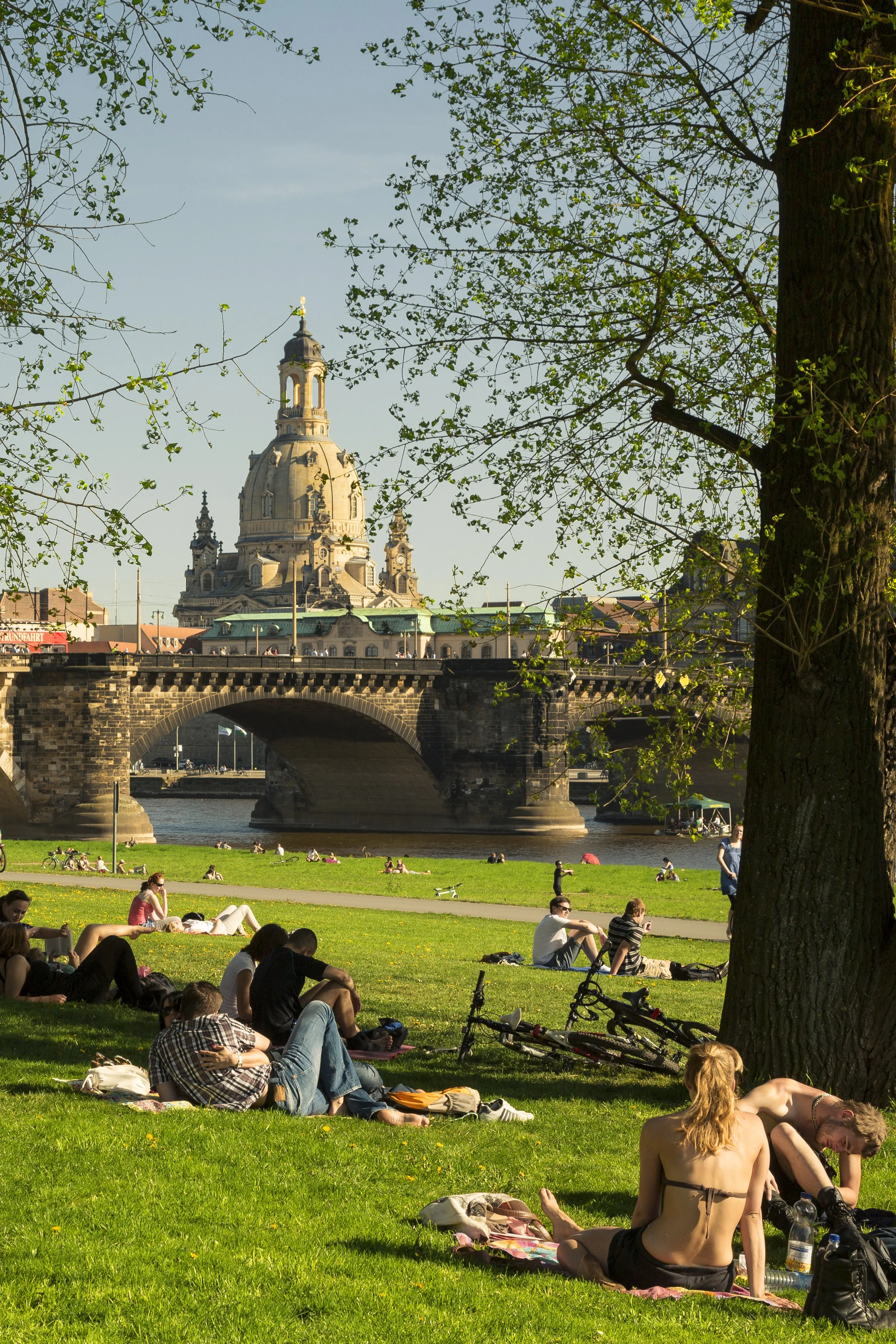
The Dresden Trust was founded in 1993 in response to a ‘Call from Dresden’ to help rebuild the city destroyed by Allied bombing in World War Two.
With HRH the Duke of Kent as its Patron, the Trust raised over £1m and created the Golden Orb and Cross, which stand on the cupola of the rebuilt Frauenkirche (Church of Our Lady) as a symbol of enduring friendship.

Our mission
The Dresden Trust builds bridges of friendship and cooperation between the people of Britain and Dresden following the destruction of the historic centre by British bombing in 1945. We create bridges – and walk on them.
With reconciliation largely achieved in the thirty years since its foundation, the Trust today focuses on cooperation with Dresden in friendly interchanges, learning, culture, conferences, and enhancement of public spaces. We relate with people of all ages and social classes.
We share our experience in healing the wounds of war by cooperating with other organisations dedicated to this cause.
Through fund-raising and events, we aim to mobilise the people of Britain behind our philanthropic goals. Overall, we are committed to making a significant contribution to good British-German relations.
The Dresden Scholarship Scheme
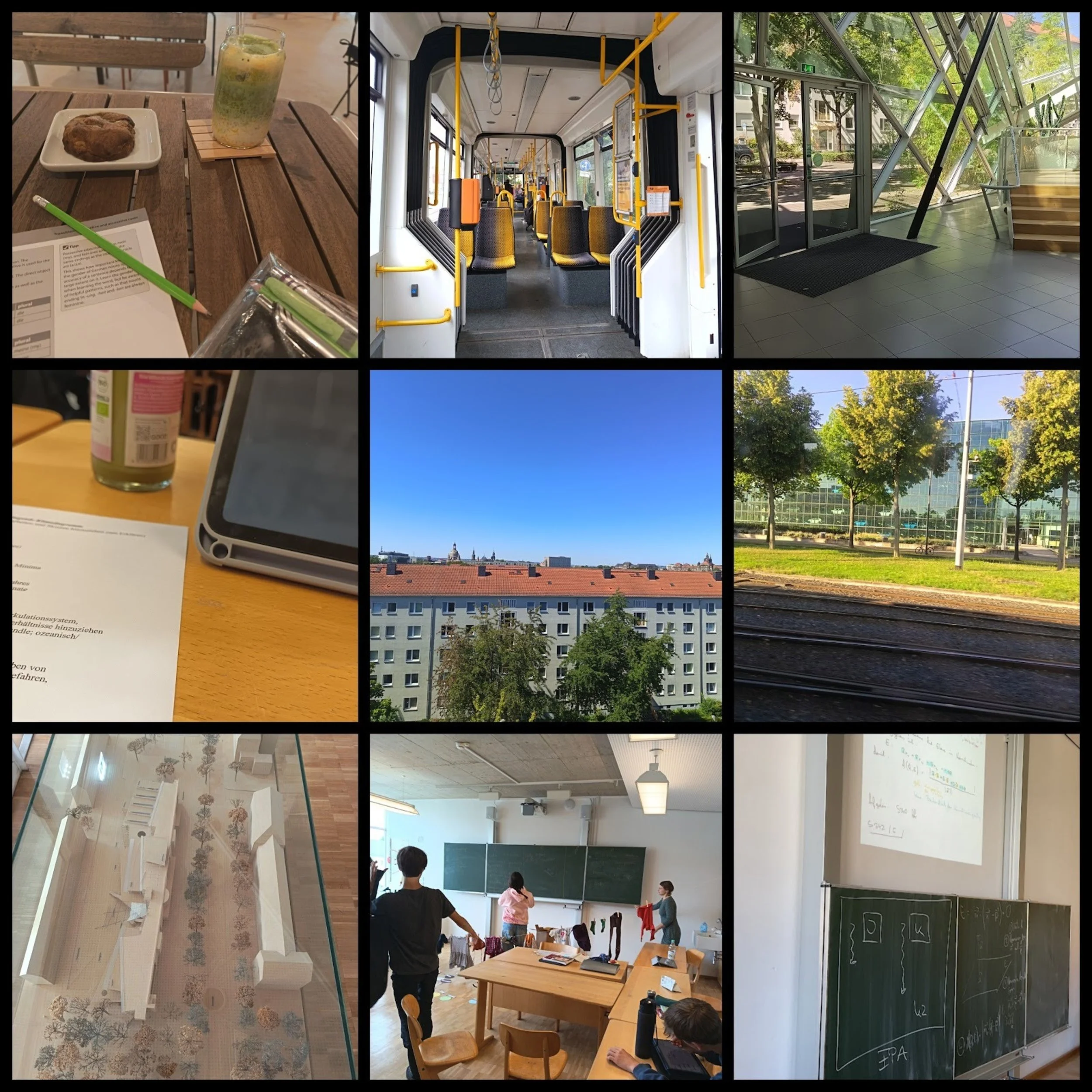
The Dresden Trust believes there is no better way of furthering harmonious relations between countries than encouraging contacts between their young people. It has established scholarship schemes to enable pupils from both the UK and Saxony to study in each other’s countries.
The Dresden Scholars’ Scheme for German pupils was founded by David Woodhead in 2000/01 and is now run by Trustee Paul Stocker.
This year, we are celebrating its 25th anniversary!
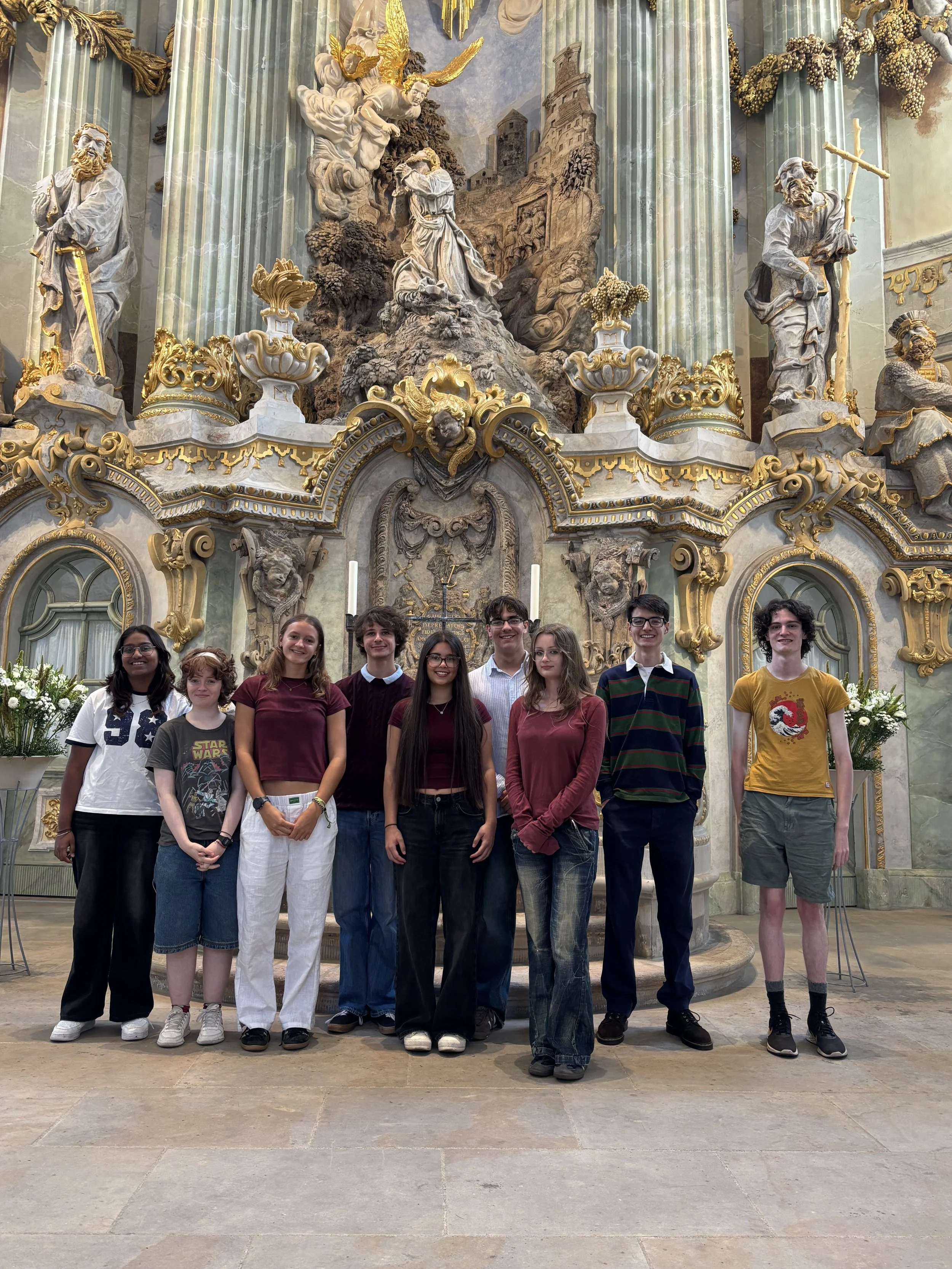
The Dresden Scholars’ Scheme for British pupils was founded by Paul Stocker in 2017 to enable British students to spend several weeks at one of the best schools in Dresden, providing a unique opportunity to improve their German language skills, experience life in one of Germany’s most beautiful cities and make new friendships.
13th February Commemoration Events 2026
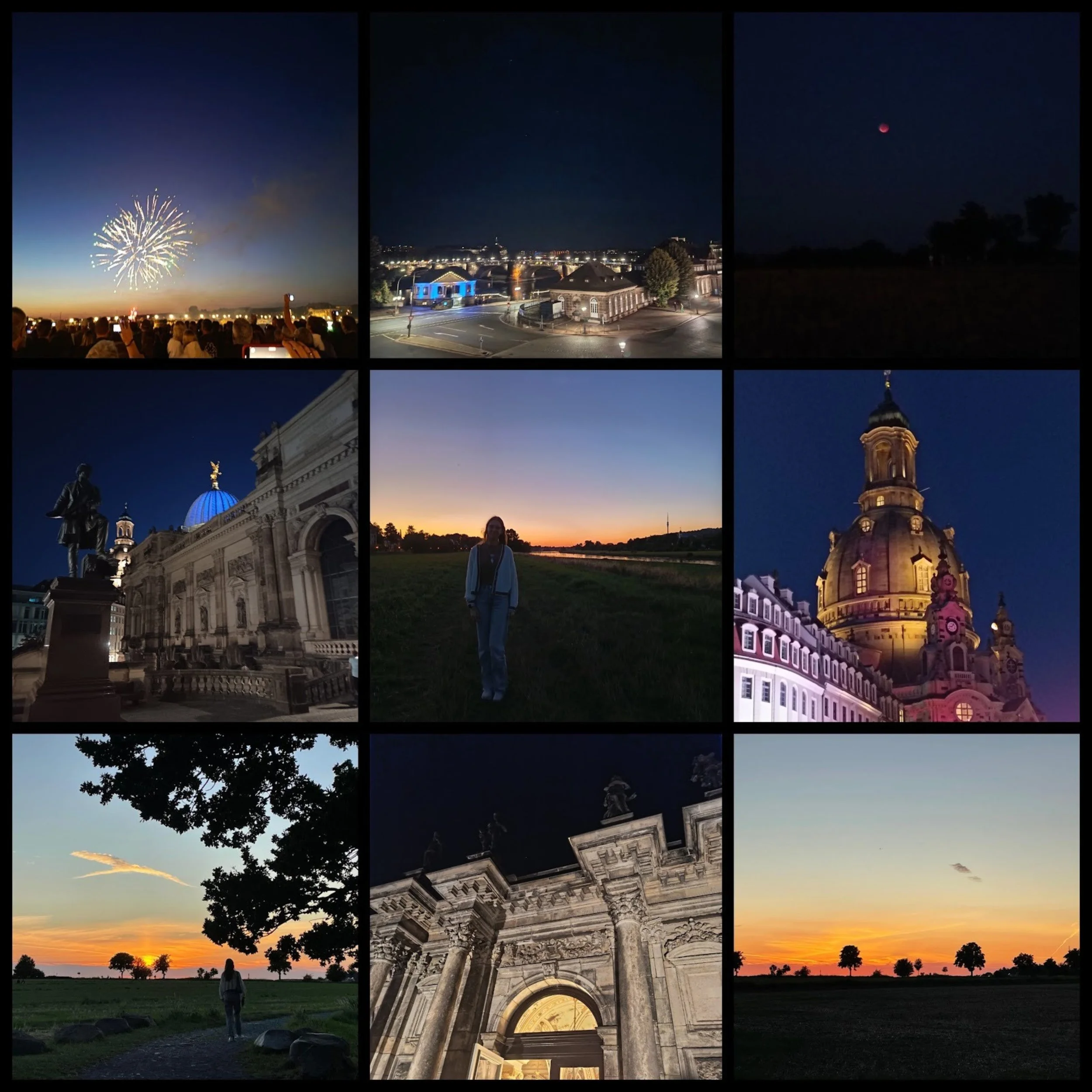
On Friday 13th February, Trustee Sinclair McKay and Project Manager Emma Lee represented the Dresden Trust at the 81st anniversary commemorations of the Allied bombing of Dresden, a date that continues to hold profound meaning for the city.
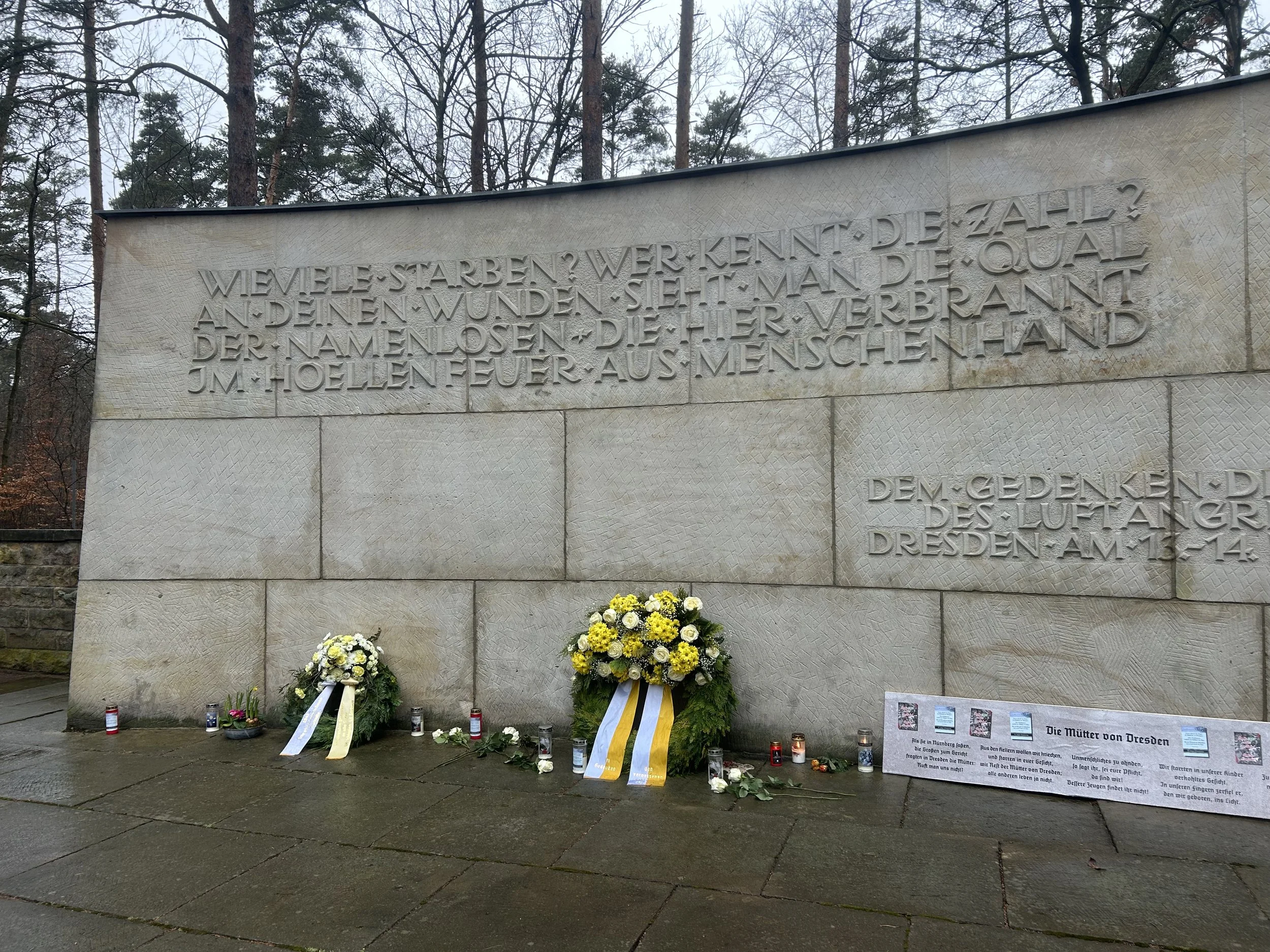
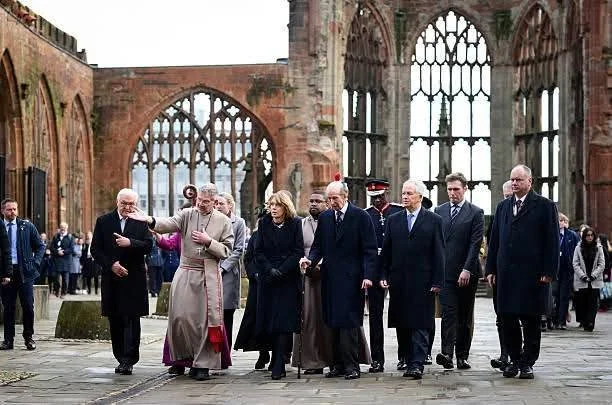
The day began at Heidefriedhof, Dresden’s largest burial site and a place of remembrance for the victims of National Socialism and the Second World War. There, alongside the Lord Mayor of Coventry, Dresden’s twinned city in the United Kingdom, they laid flowers in memorial. Afterwards, they joined other civic representatives including Deputy Mayor for Urban Development, Construction, Transport, and Real Estate Stephan Kühn, Honorary Consul of the United Kingdom in Dresden Daniel Senf, and British Embassy Berlin Councillor Ian Wood.
Conversations throughout the morning reflected both the solemness of the occasion and the continuing relevance of remembrance. The significance of the 13th February lies not only in honouring those who lost their lives, but also in reaffirming a shared commitment to reconciliation. They discussed that the Trust’s presence at these events is a visible expression of this commitment; a recognition of the past, and a determination to sustain dialogue and understanding between the United Kingdom and Germany. In a world where the pressures on international relationships are ever present, such moments of civic solidarity matter deeply.
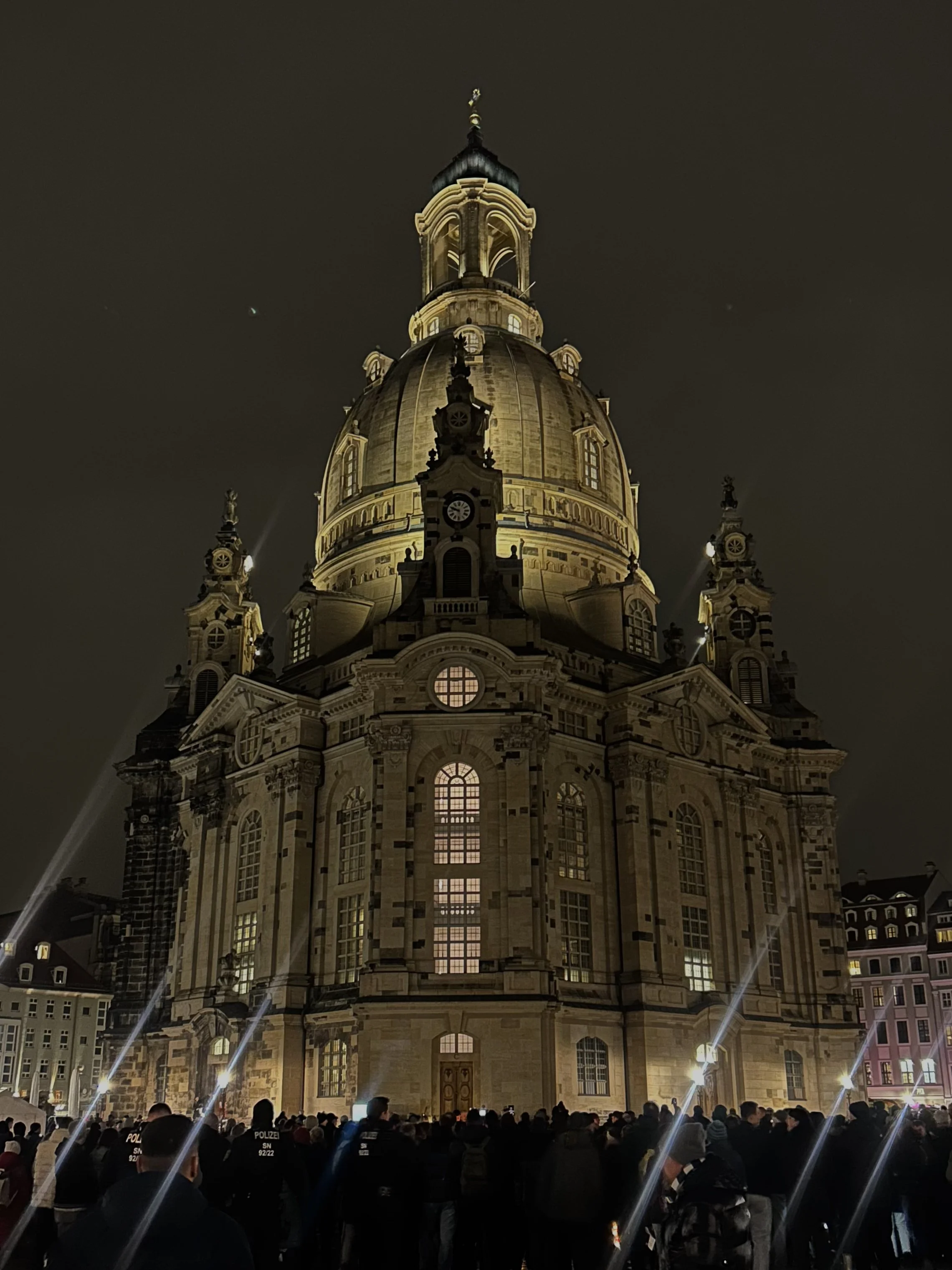
In the evening, Sinclair and Emma attended the musical prelude to the Menschenkette at the Kulturpalast, alongside the First Mayor of Dresden and Lord Mayor of Coventry. The music and speeches offered a space for collective reflection before thousands gathered to form the Menschenkette, a human chain encircling Dresden’s Old Town. Around 5,000 participants stood together in silence, demonstrating their shared opposition to war, violence, destruction, and their resolve that the 13th February should not be used for political exploitation.
A particular highlight of the day was participation in the Gedenkweg (memorial walk). Sinclair and Emma both contributed in English and German respectively, symbolising the cross-cultural partnership at the heart of the trust’s mission. The walk was not only an act of remembrance but also an opportunity for conversation. Many Dresden citizens approached them to share personal and family stories of Dresden and visits to the United Kingdom, highlighting how memory continues to shape identities and experiences across generations.
Eighty-one years on, the commemorations in Dresden remain a powerful reminder that remembrance is not static. It is an active, communal process, one that calls for dialogue and a shared commitment to peace. For the Dresden Trust, participating in these events is both a privilege and a responsibility; to stand in solidarity, to listen, and ensure that the bonds between Dresden and Coventry and between Germany and the United Kingdom, continue to be strengthened through presence, partnership, and the courage to remember together.



News
Dresden: The Fire and the Darkness
By Sinclair McKay
HANDS were joined in darkness. And as hundreds of eyes gazed out across the Altmarkt – twilight air misty with cold drizzle - the chimes of the Kreuzkirche bells brought time to a tight halt.
On February 13 - as with every other year - the Human Chain stretching around the Altstadt was a moment of extraordinary communal resistance. The commemoration, even now, is a struggle for the ownership of history and truth. This year the event was attended by Rachel Lancaster, the Lord Mayor of Coventry, who had addressed the crowds beforehand.
The iron of the bells - the notes throbbing through the square and the streets for ten minutes – serves to remove the city from its quotidian concerns. Each year, that discordant music fills the senses. Its violence is suggestive of the madness of conflict: of all conflict.
A century before the 1945 bombing, the composer Richard Wagner was balanced upon the roof of the Kreuzkirche, under a wide night sky, the streets beneath him blazing with battle.
In 1849, as the roil of revolution hit the city, Wagner had taken up a look-out position: and his own head was occupied by the mad peals and the sound of gunfire below. ‘The combination of the bells and the cannon,’ he said, were ‘intoxicating’. He later wrote: ‘in the immediate vicinity of the frightful clangour of the tower bell and to the accompaniment of Prussian bullets splattering against the tower walls, I spent one of the most noteworthy nights of my life.’
He subsequently had to flee into exile; romanticism met with brute reality. Yet the strange music of the Kreuzkirche bells remained deep within him.
For Dresden, romanticism was shattered and scorched and ground into dust in 1945. Every era is marked with conflict; what makes Dresden and the Human Chain remarkable is the concerted effort to remain alive to the ever-present danger, to avoid once more falling into the abyss. Just for a few moments, those deep, dark bells remove all listeners from the present, as a reminder to guard themselves against the future.